Quick Answer
Compare the actual configuration, not just the drive label. Hydraulic and servo are not mutually exclusive terms: a servo-controlled motor can power a hydraulic pump.
- Hydraulic: evaluate force delivery, pressure control, oil management and the actual duty cycle.
- Servo-hydraulic: evaluate how the controlled pump follows demand, and remember that the hydraulic circuit remains.
- Direct electric motion or hybrid arrangements: confirm which mechanisms are electrically driven and which functions retain hydraulics.
For any option, product quality, usable output and maintainability matter more than an isolated motor description.
How a Hydraulic Blow Molding Machine Works
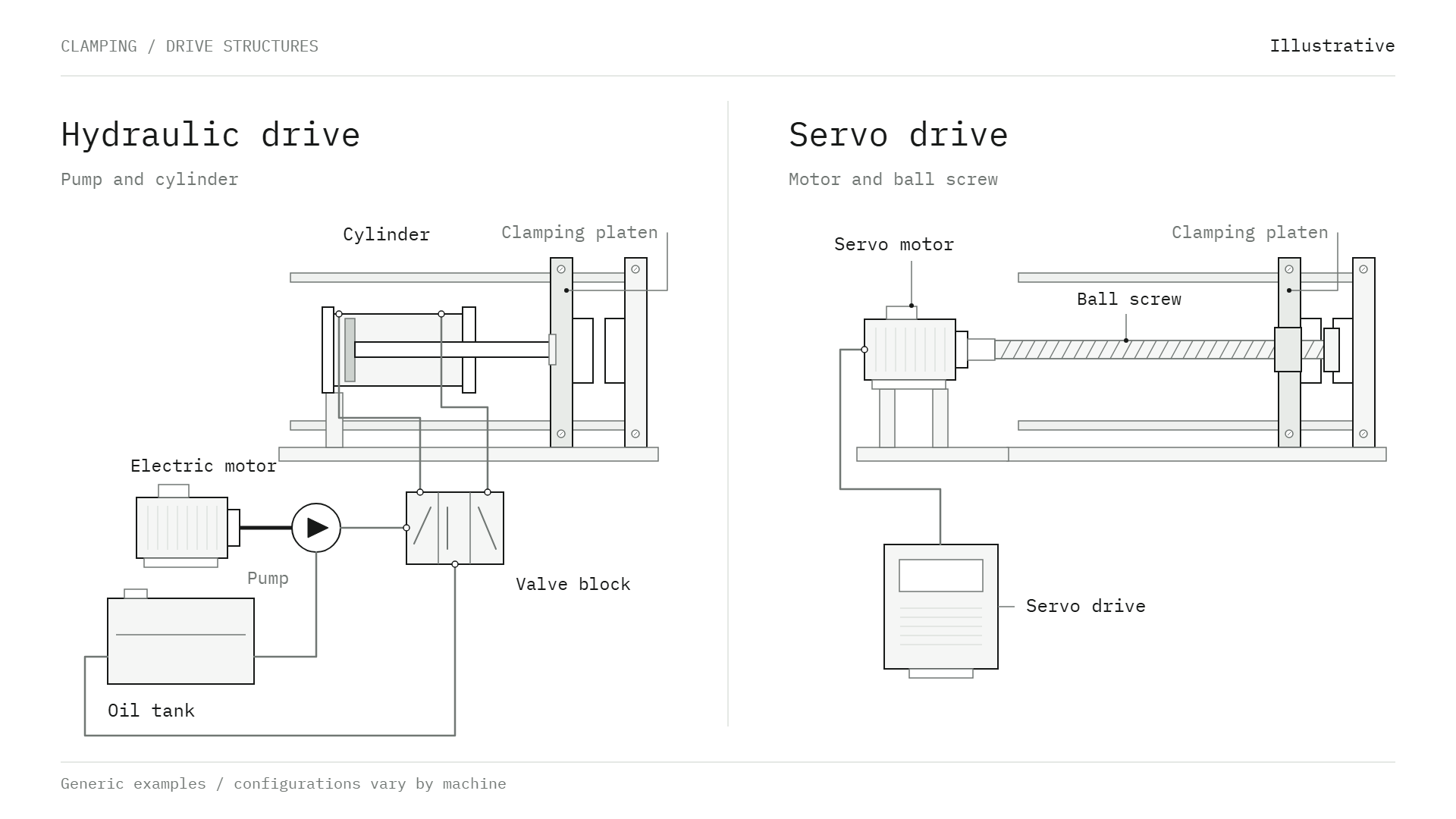
In a hydraulic system, an electric motor drives a pump. The pump supplies oil flow, and the circuit develops pressure against the load. Valves direct that flow to actuators, such as cylinders used for mold closing, carriage travel or other machine functions. The arrangement depends on the machine design.
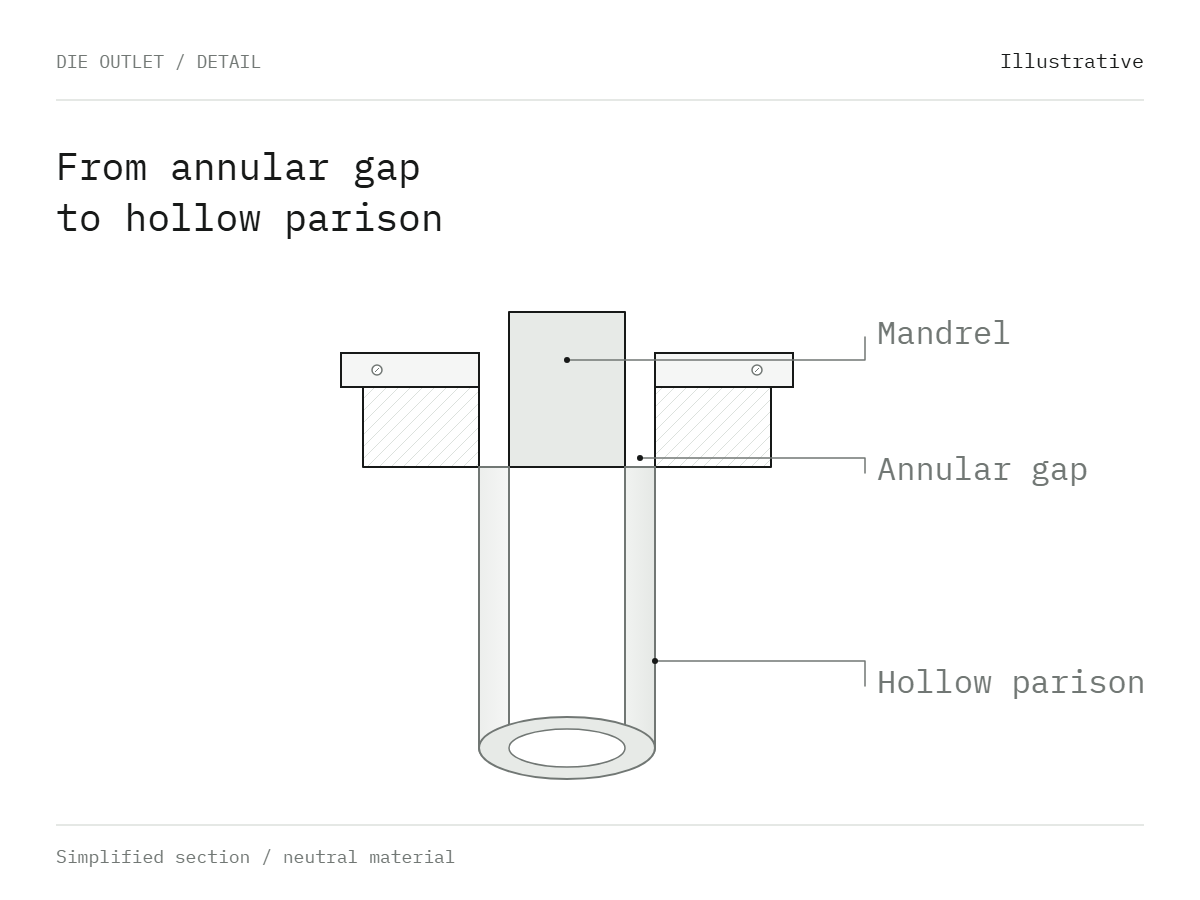
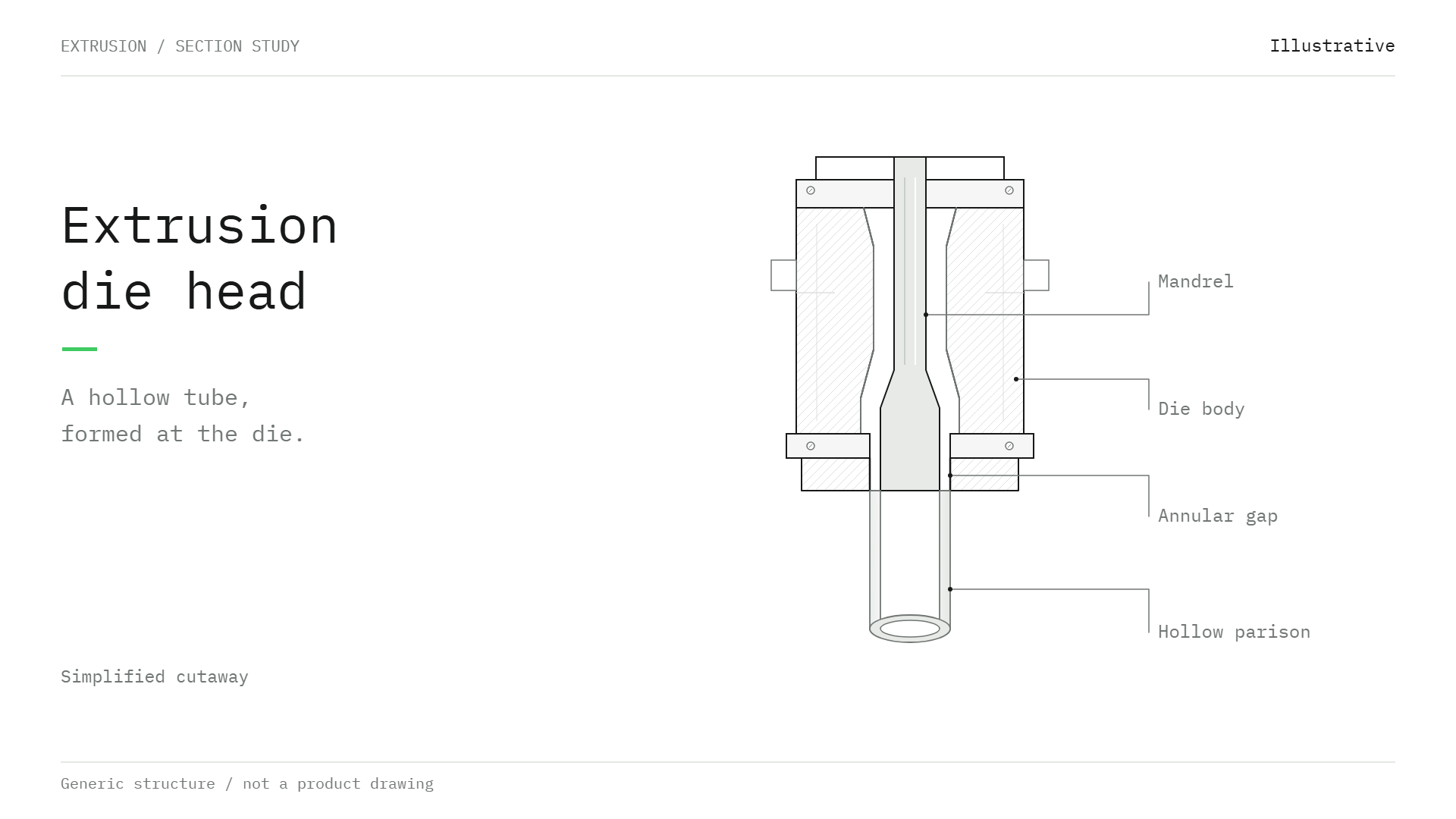
The extrusion process is a separate part of the explanation. Resin is plasticized and passes through an annular die to form a hollow parison. The mold closes around the parison; air inflates it against the cavity, and cooling allows the part to hold its shape. A hydraulic clamp does not mean that the extruder screw or every other movement uses hydraulic power.
Hydraulic performance depends on the pump, valves, feedback, seals, oil temperature and control strategy working together. A well-maintained circuit can deliver controlled force, but oil condition, filtration, leakage and cooling remain practical service considerations.
What “Servo” Means
A servo system uses feedback to regulate a commanded movement or operating condition. The term describes a control approach; it does not, by itself, identify how every machine function produces force.
- Servo-driven pump / servo-hydraulic
- A controlled motor drives a hydraulic pump. Pump delivery can follow demand, while oil, valves and hydraulic actuators remain in the circuit.
- Direct electric actuation
- A controlled motor moves a mechanism directly through a transmission, such as a screw or linkage. Check the mechanism, load rating and which movements it serves.
- Hybrid arrangements
- Different functions use different drive technologies. An electrically driven movement can coexist with a hydraulic function elsewhere on the same machine.
When a supplier uses “servo,” ask whether it refers to the pump, clamp, carriage, parison control or another function. Obtain the proposed configuration in writing before comparing machines.
Comparison
The table compares generic drive principles. It is a guide to the questions worth checking, rather than a ranking of machines or Waley series.
| Consideration | Hydraulic | Servo-hydraulic | Direct electric / hybrid |
|---|---|---|---|
| Clamping | Circuit pressure and actuator design provide force; verify the mold envelope and clamp behavior. | Hydraulic force with a controlled pump supply; verify pressure and movement control. | Mechanism and motor sizing govern direct motion; hybrid functions need individual review. |
| Energy | Pump loading, throttling and oil cooling affect demand. | Demand-matched pumping can reduce some losses; the process still consumes energy. | Removing a hydraulic function changes its losses; total consumption remains application-dependent. |
| Precision | Feedback, valves and temperature stability affect repeatability. | Controlled pumping supports regulation; assess the complete actuator loop. | Motion feedback can support repeatability; mechanics and process control still matter. |
| Maintenance | Inspect oil, filters, hoses, seals and cooling. | Retain hydraulic service and add the specified drive diagnostics. | Check transmission, lubrication and drive service; hybrid circuits still need hydraulic care. |
| Noise & cleanliness | Pump operation and leakage management need attention. | Pump speed control may reduce some noise; hydraulic oil remains. | Removing local hydraulics can reduce oil-related risks; auxiliaries and lubrication remain relevant. |
| Upfront cost | Compare the quoted machine scope and support requirements. | Control and pump specifications can change the initial investment. | Mechanisms, controls and integration affect investment; compare equivalent scope. |
Third-party perspective: Techne’s hydraulic-to-electric analysis discusses hydraulic cooling loads and oil/filter maintenance. Those are useful evaluation topics, but its manufacturer-specific results are not Waley performance claims or a universal comparison.
Which Is Better for Large Drums, IBC and Accumulator-Head Machines?
Start with the container and mold, then work back to the machine. Large drums and intermediate bulk container (IBC) inner bottles can place demanding requirements on the mold envelope, clamping behavior, parison handling and downstream support. Nominal container size alone does not select a drive system.
For an accumulator-head machine, review the discharge duty and how it interacts with extrusion, parison programming and the molding cycle. High-load functions may make hydraulic or combined arrangements practical candidates, while controlled pumping or electric motion may be useful in selected functions. The proposal must explain the complete arrangement.
Ask the supplier to demonstrate stable parison delivery, mold closing, pinch-off quality and part handling using the intended material and product. Cooling, wall distribution and reject rate can limit useful output even when a movement runs quickly. Judge the accepted part and complete cycle before choosing a drive label.
Which Is Better for Small Bottles, Food & Medical Containers?
For small bottles, repeatable movements and coordinated handling can support consistent production. Servo-controlled motion is worth evaluating where positioning, movement profiles or coordinated actions matter, but the benefit depends on the whole machine and process.
For food or medical containers, define the actual cleanliness requirements before shortlisting equipment. Reducing hydraulic equipment near the molding area can help manage oil-leakage risks. It does not establish hygienic suitability: mold design, air quality, handling, lubrication, cleaning and the production environment also require attention.
Compare proposals against your required neck finish, wall distribution, leak performance and handling method. Include the agreed checks in a product trial. A drive description alone cannot establish suitability for a particular food-contact or medical application.
How to Measure Energy Fairly
Use kWh per kg of accepted product as a practical production comparison. Define accepted product against the same quality requirements, and measure electricity and accepted mass over the same time window.
Specific production energy = measured electricity (kWh) ÷ accepted product mass (kg)
Draw the measurement boundary first. State whether the reading covers the machine only, the machine plus local auxiliaries, or the whole line. Include or separately account for compressed air, cooling, material handling and finishing equipment. Document how shared services are allocated.
Keep the resin, product, mold, part weight, process settings and quality checks comparable. Record rejected parts, flash and startup waste separately so that a favorable energy figure does not hide a poor yield. Document steady production and how startup, idle periods and changeovers are handled.
EUROMAP — reported methodology: EUROMAP 46.1 describes machine-related energy measurement and defines specific energy using extruded mass. EUROMAP 46.2 addresses a specified product and mold. These published methods help structure test reports; the accepted-product metric above is a separate buyer-facing comparison and should not be presented as their exact mass definition.
When a supplier reports a EUROMAP figure, ask for the recommendation, version, boundary, mass definition and test report. No EUROMAP result or energy class is claimed here for a Waley machine.
Questions to Ask Your Supplier
- Which functions are hydraulic, pump-servo controlled or directly electrically driven in the proposed machine?
- How were the mold envelope, clamp requirements and head arrangement matched to our product?
- What limits the production cycle: extrusion, movement, blowing, cooling or downstream handling?
- Which product-quality checks and accepted-output criteria will the trial use?
- What does the energy measurement include, and what product mass is used in the calculation?
- What oil, lubrication, filtration and cooling tasks will our technicians perform?
- Which spares, diagnostic tools and service support are included in the scope?
- How will the proposal address our cleanliness, utilities and handling requirements?
Ask for a written response tied to your application. A comparable quotation needs the same product assumptions, equipment boundary and acceptance criteria.
Waley Machinery’s Approach
Waley focuses on servo-driven extrusion blow molding solutions.
WLA / WLU / WLC (Customized) are series names to discuss when preparing your project. Selection should start with your product, material, mold and processing needs.
Contact us / RFQ to confirm drive details for your application. Ask for the proposed machine’s configuration and scope in writing so you can evaluate the relevant functions against your production requirements.
Where This Page Fits Next
Drive choice is separate from head architecture. If you still need to decide continuous extrusion versus an accumulator head from the product—not from litres alone—use the continuous vs accumulator guide.
If the product points toward an accumulator head for larger drums, continue with shot weight, clamp and mold-fit sizing before you lock a quotation scope.
FAQ
Practical answers for your machine shortlist.
What is the difference between servo and hydraulic blow molding machines?
Hydraulic describes how force reaches an actuator through pressurized oil. Servo describes controlled motion using feedback, and can apply to a pump or a directly driven mechanism. The terms can overlap. Ask which movements use which drive, then compare accepted output, process stability, maintenance and energy under the same production conditions.
Is a servo blow molding machine always directly electrically driven?
No. A servo motor may drive a hydraulic pump, so the machine still uses oil, valves and cylinders. A hybrid arrangement can combine electric motion with hydraulic functions. The word servo alone does not describe every movement. Request a written drive description for the proposed machine and your particular application.
Does a servo-hydraulic machine always use less energy?
No universal saving follows from the label. Matching pump delivery to demand can reduce some hydraulic losses, but extrusion, heating, cooling, compressed air and rejects also affect the result. Compare measured electricity per kilogram of accepted product with the same material, mold, quality requirements and clearly defined equipment boundary.
Which drive system should I consider for large drums and IBC containers?
Begin with the container drawing, resin, mold envelope, required clamping force and accumulator discharge duty. Assess the complete machine around those requirements, including cooling and handling. Hydraulic or combined drive arrangements may suit demanding loads, but suitability must be demonstrated for the proposed application rather than inferred from product size alone.
Is servo drive a better choice for small bottles, food or medical containers?
Controlled, repeatable movements can be useful for small-container production, and reducing hydraulic equipment near the molding area can help manage leakage risks. Neither feature establishes hygienic suitability. Define the product contact requirements, handling method, cleaning process and acceptance tests, then evaluate the complete production environment with the supplier.
What maintenance does a servo-hydraulic blow molding machine need?
It still needs hydraulic maintenance: oil condition checks, filtration, leak inspection and attention to hoses, seals and cooling. Servo motors, drives and feedback devices need the maintenance specified by their manufacturers. Compare service access, diagnostic support, spare-part availability and your technicians’ capabilities before selecting the proposed configuration for your plant.
How should I compare energy figures from different suppliers?
Ask for the measurement boundary, test product, material, mold, operating conditions and accepted output. Use electricity per kilogram of accepted product for your production comparison, and identify any excluded auxiliaries. Where a supplier reports EUROMAP results, request the exact recommendation, test report and mass definition rather than comparing isolated headline figures.
What does "servo control system" mean on a large blow molding machine?
On a large blow molding machine, a servo control system commonly uses closed-loop feedback for selected functions, such as a servo-driven hydraulic pump or individual axes. It does not mean every movement is directly electrically driven. Ask which functions use servo control, whether hydraulic oil circuits remain, and how the configuration suits your large-container or accumulator-head application.
What should I send Waley Machinery with an RFQ?
Send the product drawing or sample description, material, target part weight, production needs, mold information and available utilities. Include any cleanliness, handling or service requirements. Ask Waley to confirm the drive details for your application, along with the proposed scope, trial conditions and product acceptance criteria in the quotation process.
Talk to Waley Machinery about your product and Processing needs
Share your product drawing, material, mold information and production requirements. Request an application-specific proposal and confirmation of the drive details.
Discuss your application / RFQwaleymachinery@gmail.com